Reflecting on the 25th Anniversary of the Fresh Kills Landfill Closure
This month marks a significant milestone in Staten Island’s history: the 25th anniversary of the closure of Fresh Kills Landfill — once the largest landfill on planet earth.
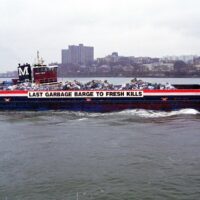
On March 22, 2001, the “Last Barge” of New York City’s municipal solid waste arrived at Fresh Kills, marking the conclusion of 53 years of landfill operations that began in 1948. As other city landfills closed over the years, Fresh Kills and Staten Island were saddled with the unpleasant task of serving as the backbone of New York City’s waste management system. That “Last Barge” signaled more than the end of an era — it marked a turning point in how the city would manage its waste and imagine its future.
Sadly, later that same year, following the attacks on the World Trade Center on September 11, 2001, a portion of Fresh Kills temporarily reopened. Materials from Ground Zero were carefully and thoughtfully transferred to Fresh Kills to support the investigation and recovery efforts. This solemn chapter concluded once all discernible materials were recovered, further deepening Fresh Kills’ place in our city’s shared history.
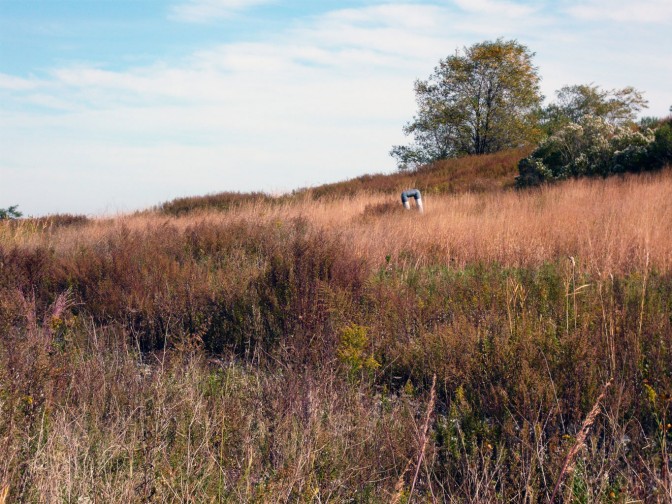
From landfill to landmark, the transformation that has occurred since then has been extraordinary. What was once a place defined by garbage is now being reshaped into the largest park project in NYC in 100 years — a testament of renewal, restoration, and possibility. Today, Freshkills Park stands as one of the most ambitious land reclamation projects in the world. Spanning 2,200 acres, it represents a bold vision for environmental stewardship, climate resilience, and public open space — a living testament to New York’s capacity to reinvent itself.
As we reflect on this 25-year milestone, we honor not only the closure of the landfill but the remarkable transformation that followed. Freshkills Park embodies renewal in every sense, turning what was once a symbol of the city’s waste into a symbol of its resilience, creativity, and hope for generations to come.